
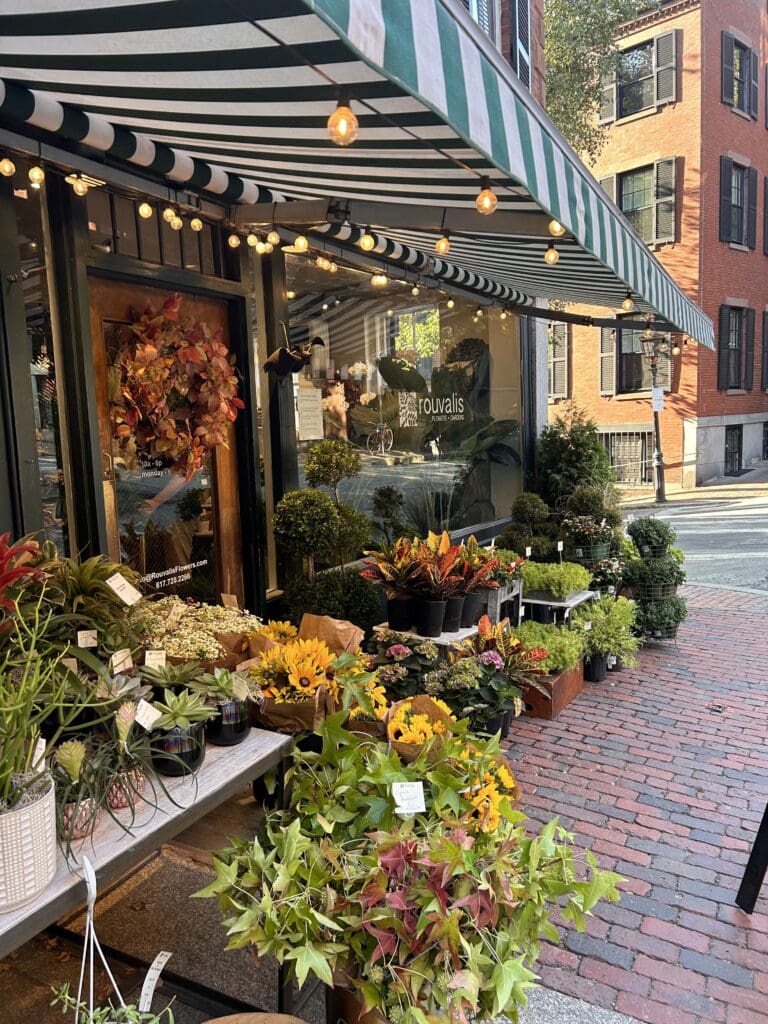
The summer garden may be winding down, but there’s still plenty to see—and do. Rosarian Paul Zimmerman shares more ways to make the most of the season.
If you think fall color begins and ends with mums, it might be time to take another look at your garden.
When we talked with Paul Zimmerman, rosarian for Jackson & Perkins, for the Fall issue of Pretty, he reminded us that autumn can bring its own kind of garden beauty—from colorful foliage and berries to ornamental grasses and even a fresh flush of roses.
Here are a few more of his tips for extending the season.
Look beyond blooms
Flowers may get most of the attention, but they aren’t the only plants capable of putting on a fall show.
Zimmerman recommends ornamental grasses, which often look their best in autumn. Some rugosa roses develop large, colorful hips, while oakleaf hydrangeas offer both lingering flower heads and foliage that changes color. Beautyberry is another standout, thanks to its clusters of colorful berries.
In other words, when you’re planning a fall garden, don’t shop only for flowers. Foliage, berries, seed heads and grasses can carry plenty of the visual load.
Don’t give up on your roses
Those summer roses may have another act in them.
“All modern roses will perform well in the fall,” Zimmerman says, noting that they’re bred for season-long flowering. Very old European Old Garden Roses that bloom only in spring won’t rebloom, and repeat-flowering Old Garden Roses may produce some fall flowers, though generally not as many.
Modern roses, though, can reward you with another flush of color as temperatures begin to cool.
Give ornamental grasses another look
If ornamental grasses have always struck you as background players, Zimmerman thinks they deserve a promotion.
He calls them underappreciated not only for fall, but throughout the growing season. They provide contrast in both texture and growth habit, and many varieties develop flowers and changing foliage in autumn.
They also bring something flowers can’t: movement. As grasses sway in the breeze, they add another dimension to the garden.
Think big—even in a small space
No sprawling flower bed? No problem.
For gardeners working with patios, porches, and other small spaces, Zimmerman recommends annuals and herbs. Herbs offer interesting foliage as well as fragrance, while the containers themselves can become part of the display.
“Use containers of different sizes, colors, and shapes,” he says. “Don’t be afraid to go bold and have the containers themselves be elements of beauty.”
That means a pretty pot doesn’t necessarily have to disappear behind what’s planted in it. Let it contribute to the composition.
Ease up on the fertilizer
Late summer is also a good time to adjust your garden maintenance routine.
If you use time-release fertilizers, Zimmerman recommends stopping them as fall approaches and switching to liquid feeds or organic granular fertilizer so you aren’t encouraging new growth in the fall.
And while you’re outside, take a look at your mulch. If it’s getting thin, this is a good time to replenish it.
Most of all, don’t write off fall
One of Zimmerman’s most useful reminders is simply that the growing season doesn’t necessarily end when summer does.
A fall garden can offer roses and berries, changing foliage and ornamental grasses, herbs and annuals—and an entirely different kind of beauty from the exuberance of spring.
So before you put away the garden gloves for the year, take another look around.
Your garden may not be finished yet.

+ Leave a comment
back to pretty