
by Ginger Stewart
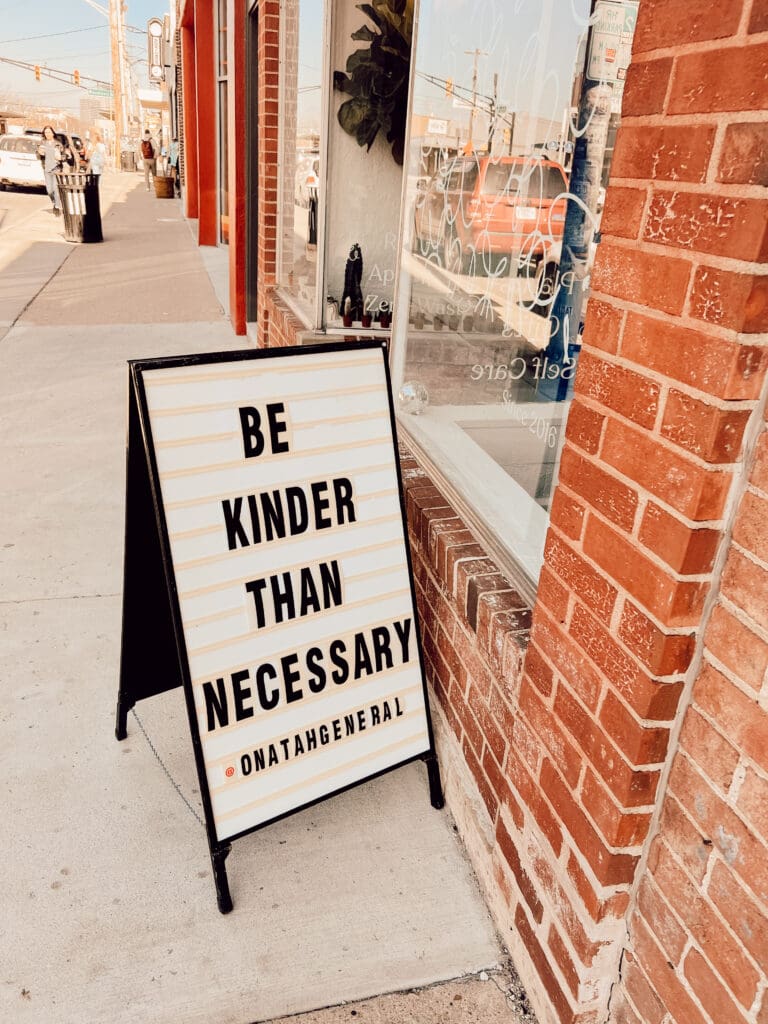
Long after we’ve forgotten our locker combinations, homework assignments, and what we wore on the first day, we remember the classmates who were kind.
My mother is 82 years old, but she still remembers something that happened when she was 6.
She had just transferred to what seemed to her like an enormous school in a Mississippi city—more than 800 students. Before that, she’d attended a country school with only three rooms and sixty-something children in all the grades combined. Her brother, a year older, had even been in the same classroom.
Now she was on her own.
She was the youngest child in her new class and small for her age, already intimidated by the sheer number of unfamiliar faces around her. Then one day the teacher called on her to spell the word “two” aloud.
Flustered, she spelled it “tow.”
The other children laughed.
Except one.
“Well, anybody can make a mistake,” a little boy said.
More than 70 years later, my mother still remembers his name.
I’ve been thinking about that story as another school year gets underway. We talk a lot about what children need when they head back to class: the right supplies, good study habits, enough sleep. Schools have programs devoted to encouraging positive behavior, and parents have been reminding children to say “please” and “thank you” since approximately the invention of children.
But some of the kindnesses we remember most aren’t really about manners at all.
They’re about noticing.
The smallest things aren’t always small
I have one of those memories myself.
During my senior year of high school, I was carrying around a sadness that most people around me knew nothing about. One day in English class, I also happened to have a cold and started coughing.
You know what happens when you’re desperately trying not to cough. Your eyes start watering, which makes you look as though you’re crying. Except in my case, the tears triggered the real ones I’d been trying very hard to hold back.
Soon I was sitting at my desk with tears streaming silently down my face.
My teacher was stern and didn’t particularly appreciate interruptions, so there was no “Why don’t you go get some water?” reprieve. I sat there until class ended, coughing when I couldn’t help it and otherwise trying to be invisible.
Then one of my classmates approached me.
He was our class president—the kind of handsome, funny, popular boy who could easily have decided certain people were beneath his notice. But he wasn’t like that. He was everyone’s friend.
“Are you going to be OK?” he asked.
That’s it.
I nodded.
He couldn’t have known what was really behind my tears. And I’m sure he walked away thinking he’d done nothing more significant than check on a classmate who’d had a coughing fit.
But I remember the gentleness in his voice to this day. There was something in the way he asked that made me feel as though he knew it wasn’t just a cough.
For just a moment, I felt seen.
Sometimes kindness is simply saving someone from embarrassment
When I asked friends on Facebook whether they remembered a kindness from their own school days, Edward Grinnan remembered one from second grade—except he was the one doing the helping.
He and another little boy were onstage performing “I’m a Little Teapot.” They were supposed to act out the song, turning and putting their arms in the proper positions.
Then Grinnan’s fellow performer froze with stage fright.
So 7-year-old Edward took matters into his own hands.
“I turned him around myself and put his arm in the right position,” Grinnan recalled.
There’s something delightful about the practicality of it. No pep talk. No drawing attention to the other child’s panic. Just: You’re supposed to go this way. Your arm goes here. I’ve got you.
And onward went the production.
Maybe that’s something children sometimes understand better than adults: When someone is already embarrassed, kindness doesn’t need an audience.
Say hello
Laura LaPan Jensen remembers befriending children who didn’t have many friends and standing up for a girl other children picked on.
But something else she said struck me even more.
“I still smile and talk to people today,” Jensen wrote, “as sometimes that is the only acknowledgement people get to let them know someone cares.”
That’s so simple.
Say hello.
Smile at someone.
Acknowledge the person who’s easy to overlook.
Middle and high school can have their own peculiar social rules. Most of us can probably remember a classmate who acted as though being spoken to by someone outside the “right” group was an affront to his or her social standing.
It takes remarkably little effort to make another person feel small.
Fortunately, the reverse is true, too.
It takes remarkably little effort to make another person feel small.
Fortunately, the reverse is true, too.
Sometimes you don’t have to say anything
Years later, when I was teaching middle school, I watched one of those tiny moments happen in front of me.
One of the boys in my class wasn’t part of the cool crowd. He was more of a rough-and-tumble country kid, and one day he came to school with a buzz cut. At the time, buzz cuts weren’t particularly fashionable, and he was the only boy in the class who had one.
Another student made a comment about it—not enough to cause a big ruckus, but enough to make him self-conscious.
Then Mimi walked over.
Mimi may have been the sweetest child I ever taught. She also happened to be strikingly beautiful and popular—the kind of girl whose approval could carry considerable weight in a middle-school classroom.
She didn’t tell the other student to stop. She didn’t announce that she liked the haircut. She didn’t make a speech about kindness.
She simply put her hand on the boy’s head, rubbed his newly shorn hair, and smiled at him.
I can still see the way he looked up at her (she was taller than he was) and smiled back.
That was it.
But in one small, wordless gesture, Mimi had taken something meant to embarrass him and made it seem perfectly fine.
I’m sure she has no memory of doing it.
I do.
You may never know
Perhaps that’s what fascinates me most about these memories.
The person who offers the kindness may have no idea what he or she has done.
The little boy in my mother’s classroom couldn’t have known that one sentence would still be remembered more than seven decades later.
My high-school classmate couldn’t have known what was behind my tears.
Mimi couldn’t have known that her teacher was watching—or that decades later, I’d still remember the expression on that boy’s face.
And the child rescued from his “I’m a Little Teapot” stage fright may not remember the incident at all.
We can’t know what another person carries into a classroom.
The girl sitting alone at lunch may simply enjoy solitude—or she may be hoping desperately that someone will ask her to sit with them. The boy who gets an answer wrong may laugh along with everyone else and then remember the humiliation for years. The friend who’s unusually quiet may be worried about something she can’t tell you.
We don’t have to know.
Kindness doesn’t require the backstory.
As children head back to classrooms this year, they’ll learn things they’ll remember until Friday’s test and things they’ll remember for the rest of their lives.
Some of the most lasting lessons may come from one another.
And somewhere, decades from now, an 82-year-old woman may still remember the name of the little boy who simply said, “Well, anybody can make a mistake.”
My mother does.
His name was David.

+ Leave a comment
back to pretty