
by Ginger Stewart
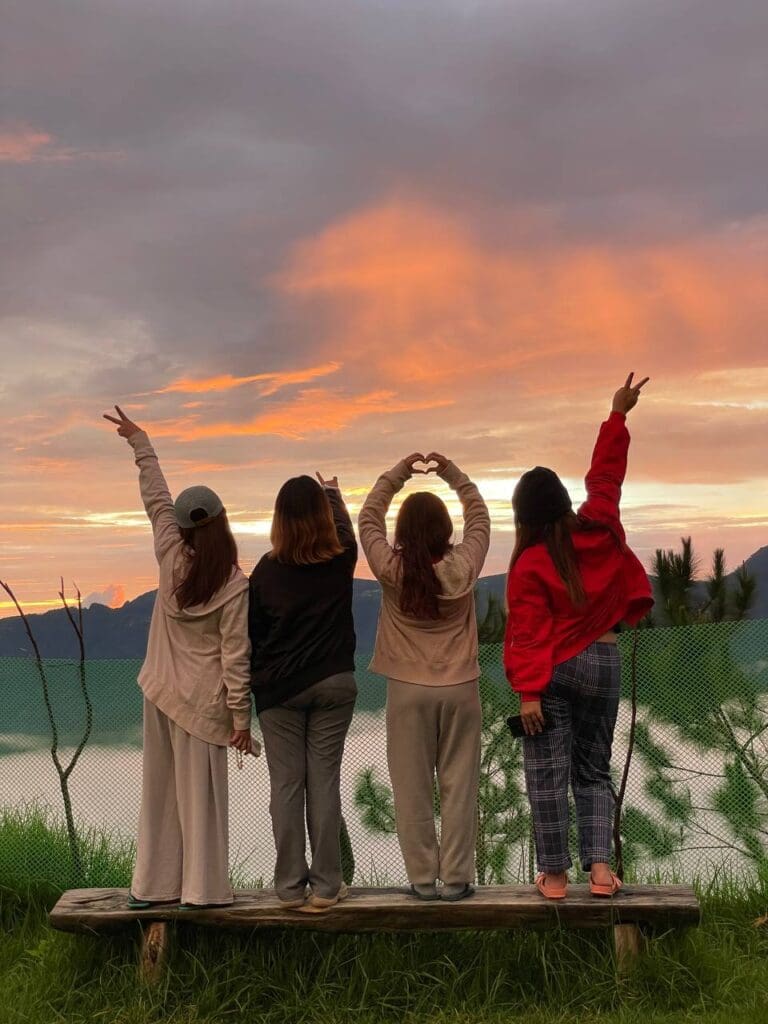
Some friendships survive moves, marriages, children, careers—even years without speaking. We asked people who’ve been friends for decades what keeps them together.
“But if the while I think on thee, dear friend,
All losses are restored and sorrows end.”
—William Shakespeare, Sonnet 30
I have always been fascinated by people who are still best friends with someone they met in second grade.
How do they do it?
I’ve had close friends at different stages of my life, but time, distance, and changing circumstances have a way of changing friendships, too. And then I meet someone who casually mentions that she’s having lunch with her best friend from third grade—as if maintaining a friendship for 58 years is no more remarkable than keeping the same set of dishes.
I wanted to know the secret.
So I asked.
I put the question to friends and readers on Facebook: People who have maintained a close friendship for decades, what’s your secret? Was there something they consciously did, I wondered, or did they simply get lucky and find their person?
The answers poured in. And while no one offered a foolproof formula for lasting friendships, certain themes appeared again and again.
They make the effort.
This was the big one.
Heather Mashburn Grant and her longtime friends make a point of getting together at least a couple of times a year and stay connected through a group text. LaShana Sorrell has college friends who take an annual trip, maintain a never-ending group chat, and schedule quarterly video calls.
“It’s about being intentional,” Sorrell said.
My cousin Vicki Weathers told me about two friends she’s had since second grade. They attend a school reunion every year largely for the chance to see one another and try to get together at other times despite living in different cities.
“Great memories with old friends,” Weathers said. “Loving each other, and keeping in touch is so very important.”
In other words, lasting friendships don’t seem to run entirely on autopilot. Someone texts. Someone plans lunch. Someone makes the phone call.
And, crucially, someone on the other end answers.
They don’t mistake distance for the end.
Here’s something I didn’t expect: A lifelong friendship doesn’t necessarily mean a lifetime of uninterrupted closeness.
Again and again, people told me about friends they could go weeks or months without talking to, only to pick up exactly where they’d left off.
Cristen Peterson Holman described a group text that can be “crickets for months” until someone says something and suddenly everyone is chatting again as though no time has passed.
Susan McGaughy Daria has maintained friendships of more than 30 and 40 years by “learning to let each other grow in different directions while still holding on to the bonds and foundation of our friendship.”
And then there’s Tess Forte.
Her closest friends date to fourth grade, high school, and freshman year of college. But one of those friendships included a 10-year period when the two didn’t speak at all. They missed each other’s weddings and the births of their children.
Then they reconciled.
“It was like no time had passed,” Forte said.
Her secret? Being willing to work through inevitable hurts, apologize, forgive, and allow each other to grow through life’s changes.
Maybe lifelong friendship isn’t always an unbroken line. Sometimes there are gaps in it—and two people who are willing to pick up the pencil again.
They let each other change.
That’s another theme that surfaced repeatedly.
People who meet when they’re 8 or 18 can’t possibly remain exactly the same at 38, 58, or 78. Careers change. Families change. Interests change. Beliefs can change.
The friendships that endure seem to have room for that.
Jordan Staggs has been close to one of her best friends since fifth grade. They’ve lived in different places, had different personal lives, homes, and careers, and even weathered a rough patch in college.
None of that ultimately mattered.
“She has just always been someone I felt I could be my most authentic self with,” Staggs said.
Rachel Sweigard said something similar about her high-school friends, who have lived in different states for the past decade. They stay connected through an almost-daily group message and share a rare kind of ease.
“I feel like we can all just be ourselves without explanation or apology,” Sweigard said.
Perhaps that’s one of the great gifts of an old friend: She doesn’t just know who you are. She knows who you were—and somehow makes room for all the versions in between.
As Nikki Notare put it, there’s “something irreplaceable about the people who have known you through every version of yourself and understand you like NO one else.”
They show up.
It’s easy to be friends when life is fun.
Several people told me the deeper bonds were forged when it wasn’t.
Luajuana Brasfield has maintained friendships dating back to first grade and high school. The friends keep in touch, but more important, she said, “we show up when there’s a need or a celebration.”
Sharon Drach Mangas remains close to friends she met through theater as a teenager. Decades later, they’ve supported one another through some of life’s hardest losses.
“We step up and support each other through thick & thin,” Mangas said.
And Claudia Murphy’s story spans more than 60 years.
She and six girlfriends became friends in high school, but after graduation their lives diverged. For roughly three decades, Murphy was in graduate school and teaching while her friends married and raised children.
One friend, Dianne, kept sending Christmas cards and meeting her for lunch whenever Murphy came home.
Then Murphy’s father died in 2003.
She reached back toward those old friends, and their “love and warmth and kindness” helped ease her grief. Since then they’ve traveled together, celebrated birthdays, and continued gathering as life has inevitably changed. Husbands have developed serious illnesses; one friend now lives in assisted living. The trips aren’t really on the agenda anymore.
The friendship is.
They laugh.
This might be the most enjoyable ingredient in the recipe.
Edward Grinnan summed up his formula in three things: “Acceptance, honesty, and a shared humor.”
Notare also credited loyalty, shared history, and “bustin’ each other’s chops,” adding, “laughter is everything.”
Shared interests came up repeatedly, too. Chuck Sawyer’s oldest friendships grew from playing music together. Others mentioned books, theater, travel, food, and even Dungeons & Dragons.
It makes sense. Friendship can’t be sustained entirely by obligation. You have to still like each other. You need something to talk about. Something to do. Something that makes both of you laugh until you can’t remember what was so funny in the first place.
They don’t have to agree about everything.
Do lifelong friends need to share the same values?
Some people thought so. Others made an interesting distinction between sharing fundamental values and sharing the same opinions.
Mangas and a best friend she’s known since 1980 are on opposite sides politically. They simply avoid politics. Their faith and their history bind them, and they’ve supported each other through decades of family life.
Cindi Scales also has a childhood friend who is her “polar opposite politically.”
“But if people give it a chance,” Scales said, “we’re all much more alike than we are different. We want the best for our families and futures.”
Maybe compatibility isn’t about agreeing on everything. Maybe it’s knowing which differences matter—and which ones don’t matter enough to cost you someone you love.
And sometimes, they really did get lucky.
There was one part of my original question I didn’t want to overlook: Did these people possess some special friendship-maintaining skill, or had they simply been fortunate enough to find the right people?
The answer seems to be both.
You can send the texts, make the plans, forgive the hurts, and allow room for change. But a lasting friendship requires someone else who wants to do those things, too.
The effort has to travel in both directions.
And perhaps that’s why the people who’ve found these friendships treasure them so much. It isn’t simply that they’ve managed to keep someone in their lives for 20 or 40 or 60 years. They’ve found someone who kept choosing them back.
Murphy realized that herself as she wrote about her six high-school friends. My question, she said, had given her a “tearful epiphany.”
“My girlfriends of 60+ years have given me pieces of their hearts to delight and comfort my own,” she wrote. “And I am grateful indeed.”
Maybe that’s the secret after all.

+ Leave a comment
back to pretty